Kyoto Kimono Types and Seasonal Rental Guide
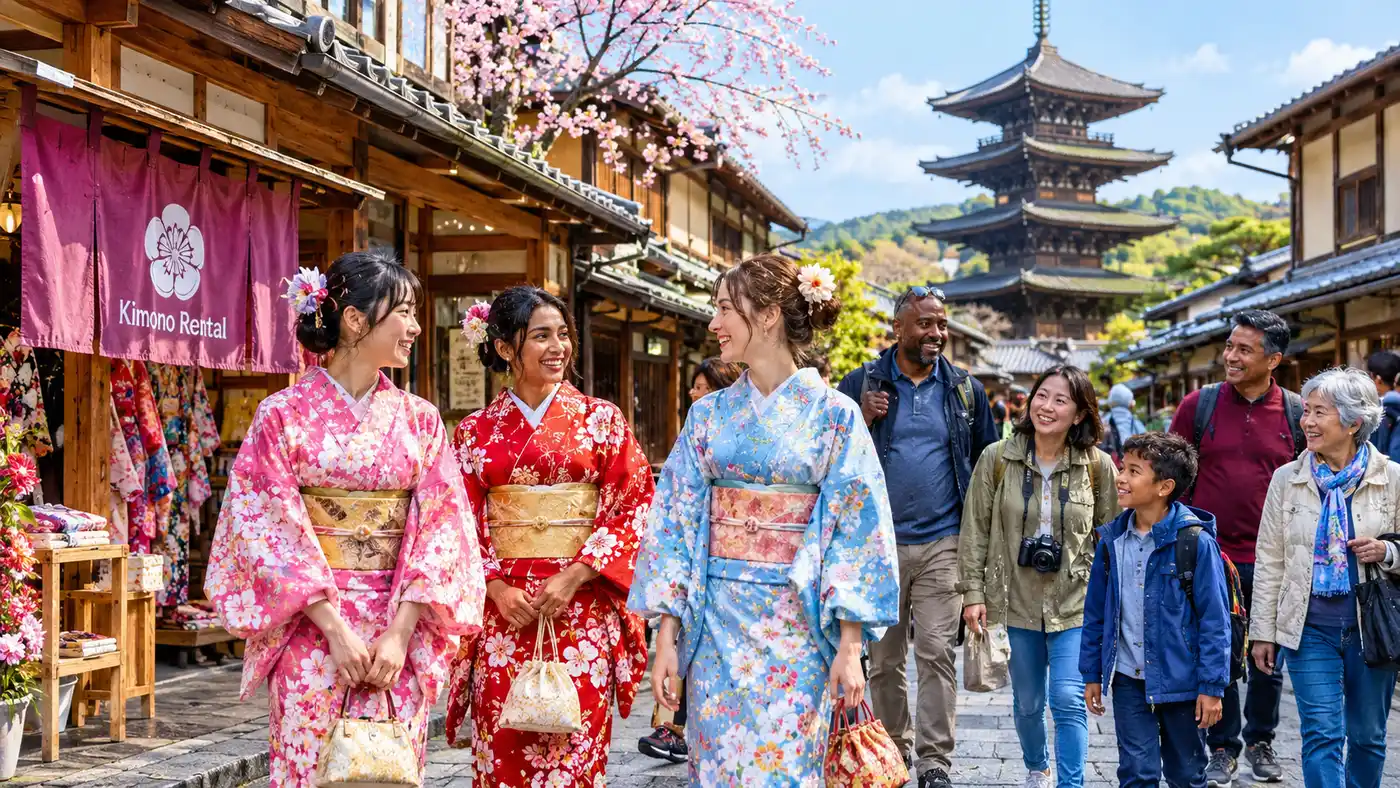
My first July afternoon in Gion felt like walking straight into a hot, wet sponge. The humidity was sitting somewhere around 85%, cicadas were screaming from the weeping willows along the Shirakawa canal, and yet dozens of travelers were strolling along the flagstones looking remarkably fresh in airy cotton robes. If you plan to explore the old capital during the sweltering months, booking a yukata kimono rental kyoto service is easily the smartest wardrobe choice you can make. The lighter cotton weave breathes with the draft off the river, saving you from melting under the midday sun.
Most visitors think a kimono is just a kimono. Then they walk into a rental shop, stare at walls of multicolored bolts and hanging garments, and freeze up completely. Between unlined summer cottons, sweeping silk formal sleeves, heavy wool winter coats, and layered bridal brocades, the world of traditional Japanese dress changes radically depending on what month it says on the calendar. Knowing what to wear, when to wear it, and how to avoid freezing or overheating will turn an awkward costume day into something you actually enjoy living in for eight hours.
Book your kimono rental kyoto experience:
Summer Heat and the Art of Yukata Kimono Rental Kyoto
Kyoto sits in a natural basin surrounded by mountains on three sides. That geographic bowl traps humid air from June through late August, creating summer days that regularly break 36 degrees Celsius. Wearing a formal, lined winter garment in that kind of heat is genuine misery. That is why rental shops completely swap their inventories in late May, packing away the heavy crepes to make room for unlined cotton and linen yukata.
A yukata is technically an informal summer robe. It was originally worn by nobility stepping out of traditional steam baths centuries ago, but it evolved into standard street attire for summer fireworks, lantern festivals, and temple evening viewings. Unlike standard kimono, you wear a yukata without a heavy white collar showing underneath. There is no thick nagajuban slip underneath, just a lightweight cotton under-slip called a hadajuban, or sometimes just your own breathable camisole. You pair it with bare feet in wooden geta clogs, which make a crisp clapping sound against the flagstones in Pontocho alley.
When you look into where to rent a kimono in Kyoto during July or August, keep your eyes peeled for airy open weaves like ro or sha if the shop offers upgraded fabrics. These are traditional gauzy weave methods that feature tiny horizontal ventilation slits right in the threads. A basic printed polyester yukata from a budget chain will trap your body heat against your skin within twenty minutes. Real cotton or a linen-cotton blend costs maybe ¥1,200 more at checkout, but the relief when an evening breeze rolls off the Kamo River makes that small upgrade worth every single yen for anyone seeking a proper kyoto kimono rental summer experience.
Pro tip: Slip a small packet of tenugui cotton hand towels and some cooling body wipes into your sleeve pocket, because wooden geta make ducking into a modern convenience store for AC surprisingly slow work.
Stepping into Elegance: Silk, Luxury, and Furisode Kimono
Autumn brings an entirely different mood to the city. Once the maples flare red at Tofuku-ji in November, the streets fill with elaborate, sweeping patterns that make simple street yukata look modest by comparison. This is prime season for a furisode kimono rental kyoto experience. Furisode translates literally to "swinging sleeves," and you can spot them instantly by the dramatic fabric panels hanging almost down to the ankles. Traditionally worn by unmarried women for coming-of-age celebrations or close family weddings, they turn an ordinary walk through the Nanzen-ji aqueduct into something cinematic.
If you want pure historical beauty, skip the synthetic racks and search out a dedicated silk kimono rental kyoto package. The difference in drape between synthetic polyester and authentic tango chirimen silk crepe is staggering. Polyester shines under harsh sunlight with a slick plastic sheen and tends to slide out of alignment as you walk. Pure silk has a dull, heavy luster. It grips the obi sash firmly, holds deep vegetal dye tones, and swishes with a muffled rustle rather than a synthetic squeak.
Booking a luxury kimono rental kyoto package usually means you are assigned a master dresser who has spent decades learning the craft. Instead of rushing you through a five-minute assembly line with elastic clip-on belts, they construct your silhouette using multiple muslin ties, stiff canvas shapers, and an intricate hand-folded fukuro obi. These sashes measure more than four meters long, woven with real metallic threads depicting pine needles, tortoiseshell hexagons, or flying cranes. You can easily expect to invest ¥12,000 to ¥25,000 for this level of craftsmanship, as outlined in our Kyoto kimono rental cost guide, but the photos you take against the weathered cedar walls of Ninenzaka will look like fine art rather than a quick tourist snapshot.
Note: Authentic silk cannot tolerate rainwater without permanent water-spotting, so most premium shops will swap your reservation to high-grade synthetic blends if morning radar predicts a sudden downpour.
Braving the Chill: Kimono Rental Kyoto Winter Strategies
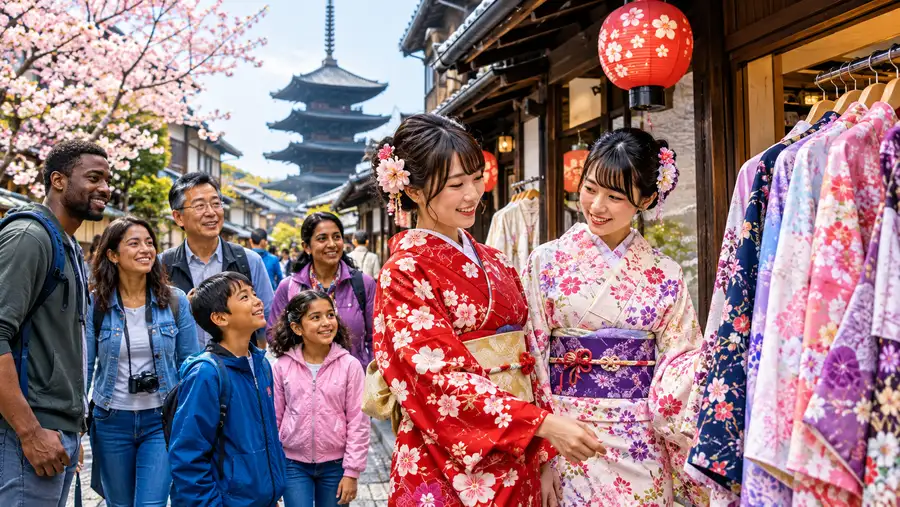
Winter here is bone-chilling. The cold creeps right off the stone floors of wooden temples and works its way straight through your split-toe tabi socks. Between December and early March, you will be wearing an awase kimono, which is fully lined with soft silk or synthetic habutai lining to seal in body heat. But that lining alone will not save you when the wind whips across the Togetsukyo Bridge in Arashiyama.
A smart kimono rental kyoto winter outing relies on invisible base layers. The dressing staff will wrap you tightly, but they leave your neck and ankles exposed to maintain the classic neckline profile. If your base layer creeps up your collarbone, it breaks the line of the kimono. Choose your thermal underwear carefully before heading into the dressing room:
- Deep scoop neck tops: Wear thermal shirts cut exceptionally low in both the front and back so they remain hidden under the pulled-back kimono collar.
- Cropped thermal leggings: Pick 7/8 length tights that stop well above the ankle bone so the ribbed cuffs do not peek out beneath the hem when taking long strides.
- Fleece-lined tabi socks: Ask the shop staff for extra-thick, brushed cotton tabi with warm fleece interiors instead of the flimsy single-layer nylon alternatives.
- Velvet or wool haori: Rent an outer hip-length jacket that layers over your obi sash to block crosswinds while adding deep jewel tones to your outfit.
Do not be shy about asking for a faux-fur stole or a heavy wool shawl. Local women wearing their finest New Year dresses at Yasaka Shrine always wrap white or silver fox stoles across their shoulders. It feels cozy, and it hides the gap at the back of the neck where icy gusts love to strike.
Book your kimono rental kyoto experience:
Formal Occasions and Kyoto Wedding Kimono Rental
Walking the stone paths in a daytime walking outfit is one thing. Dressing for an authentic ritual or professional photography session requires stepping into the upper tiers of Japanese ceremonial attire. Kyoto traditional kimono rental covers everything from daily street garments up to homongi ("visiting wear"), which features unbroken painted scenes drifting across the seams from shoulder to hem. These are the choices favored by travelers attending formal tea ceremonies in Uji or private koto performances in historic machiya townhouses.
At the absolute apex of the craft sits kyoto wedding kimono rental. If you are staging an engagement shoot or vows renewal along the bamboo groves, you are entering the world of shiromuku and iro-uchikake. The shiromuku is a spotless, all-white bridal ensemble that symbolizes purity and a bride's willingness to be dyed into the colors of her new family. The outer robe is heavily padded at the hem, dragging along the tatami in soft waves. Underneath, multiple layers of raw white silk are cinched with immaculate precision.
The alternative is the iro-uchikake, an outer robe saturated with vivid vermilion, gold leaf, and embroidered peonies or phoenixes. These garments are staggeringly heavy. A real embroidered wedding coat can easily weigh over five kilograms. You do not just throw this on and head out for matcha soft-serve ice cream. You need an attendant trailing you with wooden supports to lift the hem off the pavement, and getting dressed takes at least 75 minutes with two dressers working in tandem. It is a slow, meditative, occasionally exhausting ritual that commands absolute respect for the weavers in Kyoto's Nishijin textile district who spent months throwing wooden shuttles to create a single bolt.
Matching Kimono Styles to Kyoto's Changing Seasons
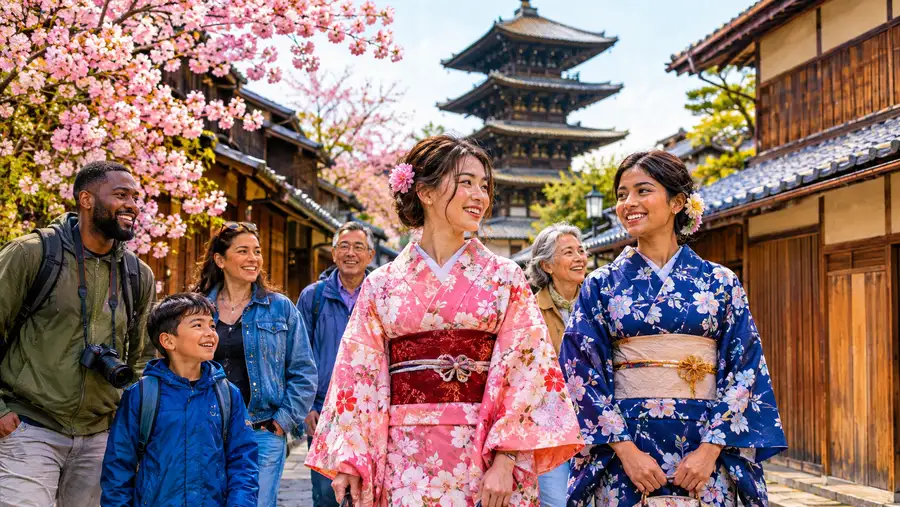
The Japanese calendar recognizes subtle micro-seasons, and the traditional textile world follows those shifts with strict devotion. Wearing the wrong weight in the wrong month is considered a faux pas among local dressmakers, though rental shops are gracious with international visitors who simply want to look nice.
To help you figure out what you will actually be handed at the counter when you show up for your fitting, here is how the garments match up against the climate across the year:
| Kimono Type | Primary Season | Fabric Weight | Undergarments | Formality Level |
|---|---|---|---|---|
| Yukata | Late June - August | Single-layer cotton or linen | Simple slip, bare neck | Casual, festival, street |
| Hitoe | June and September | Unlined silk or synthetic | Nagajuban with ro collar | Casual to semi-formal |
| Awase | October - May | Fully lined silk/crepe | Full nagajuban under-robe | Standard day to formal |
| Furisode | October - April | Heavy silk brocade | Multi-piece formal set | Very formal, celebratory |
| Iro-Uchikake | Year-round (photo shoots) | Padded, gold-threaded silk | Full ceremonial kakeshita | Bridal only |
Beyond the fabrics, the seasonal motifs dyed into the cloth are meant to anticipate nature rather than echo it. A traditional stylist will tell you never to wear cherry blossom patterns when the sakura are at peak bloom. It is considered poor taste to compete with the trees. Instead, you wear weeping cherry prints two weeks before the buds open, shifting to tender green maple leaves or wisteria vines the moment the petals hit the dirt.
Here are a few quick tips to help you select patterns that fit the landscape when you arrive:
- Spring themes: Plum blossoms for late winter chill, followed by gentle peach, iris, and misty pastel gradients that reflect the pale morning light over Maruyama Park.
- Summer freshness: Crisp navy yukata with goldfish, ripples of flowing water, morning glories, or indigo firework bursts that give viewers a psychological sensation of coolness.
- Autumn warmth: Deep ochre, rust orange, burnt persimmon, and bellflower prints that balance out the fiery scarlet canopy of the northern hills.
- Winter drama: Snow-laden pine boughs, geometric tortoise patterns, and stark crimson camellias that stand out brilliantly against damp gray flagstones and bare cedar timbers.
Honestly, you do not have to stress over every historical guideline. A good rental outfitter will gently guide you toward colors that flatter your skin tone and match the current calendar week. Just trust their suggestions when they reach for an obi belt that seems totally clashing at first glance. Contrast is the whole secret to traditional Japanese aesthetics, and an obi in an unexpected complementary shade usually makes the entire outfit sing.
Frequently Asked Questions about yukata kimono rental kyoto
What is the difference between a yukata and a kimono?
A yukata is an unlined cotton garment meant strictly for warm summer weather, worn casually without a structured collar or socks. A kimono is a layered, more formal garment typically made of lined silk or wool, worn over an under-robe with a crisp white collar visible at the neck and paired with split-toe tabi socks.
Can I wear a silk furisode in the middle of summer?
Standard heavy furisode are far too hot for July and August, but some shops offer summer furisode made of unlined ro silk gauze. These preserve the dramatic hanging sleeves while allowing air to pass freely through the weave so you stay safe from heat exhaustion during photo sessions.
Do men have different seasonal kimono types in Kyoto?
Yes, men switch between unlined cotton yukata in summer and lined wool or silk sets in autumn and winter. Men's outfits often feature a mid-length haori jacket tied with a braided haori-himo cord, which adds extra insulation and a refined silhouette during cold months.
Quick Reference
- Yukata season runs strictly from late June through late August
- Awase lined kimono are standard from October through May
- Pure silk drapes better than polyester but cannot get wet
- Furisode sleeves are reserved for formal, single-woman attire
Book your kimono rental kyoto experience:
The Bottom Line
Dressing up in Kyoto should never feel like surviving an endurance test. The secret to having an unforgettable day lies entirely in matching your fabric choices to the thermometer outside your ryokan window. Choose an airy cotton yukata when the cicadas are rattling the bamboo, wrap up in layered lined silks with a cozy wool shawl when the mountain frost settles over Kiyomizu-dera, and let the shop's dressing sense take care of the rest.
Read more about kimono rental kyoto.